


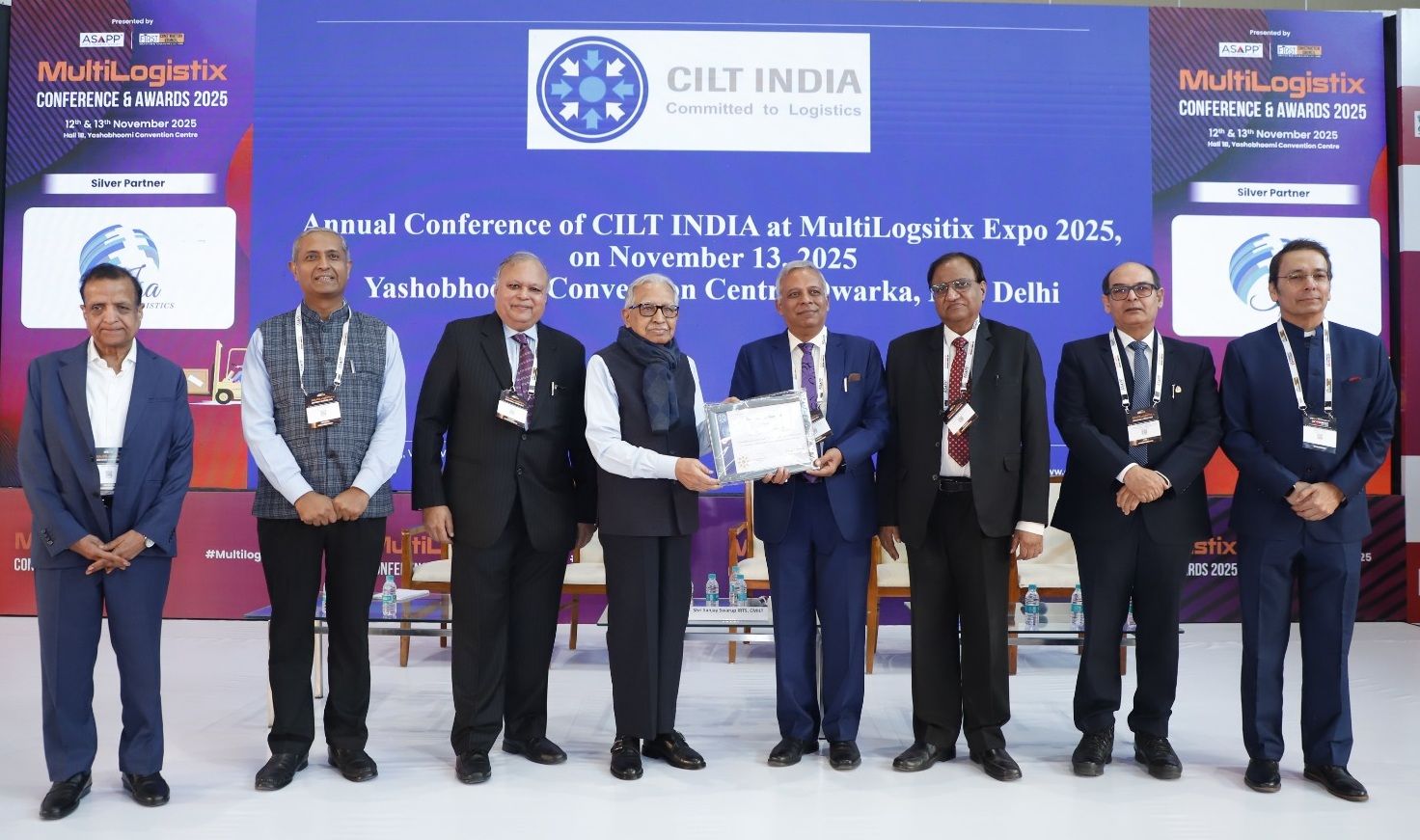
The Annual Conference of CILT India was held during MultiLogistix Expo 2025 , on 13th November 2025 at Yashobhoomi Convention Centre, New Delhi.
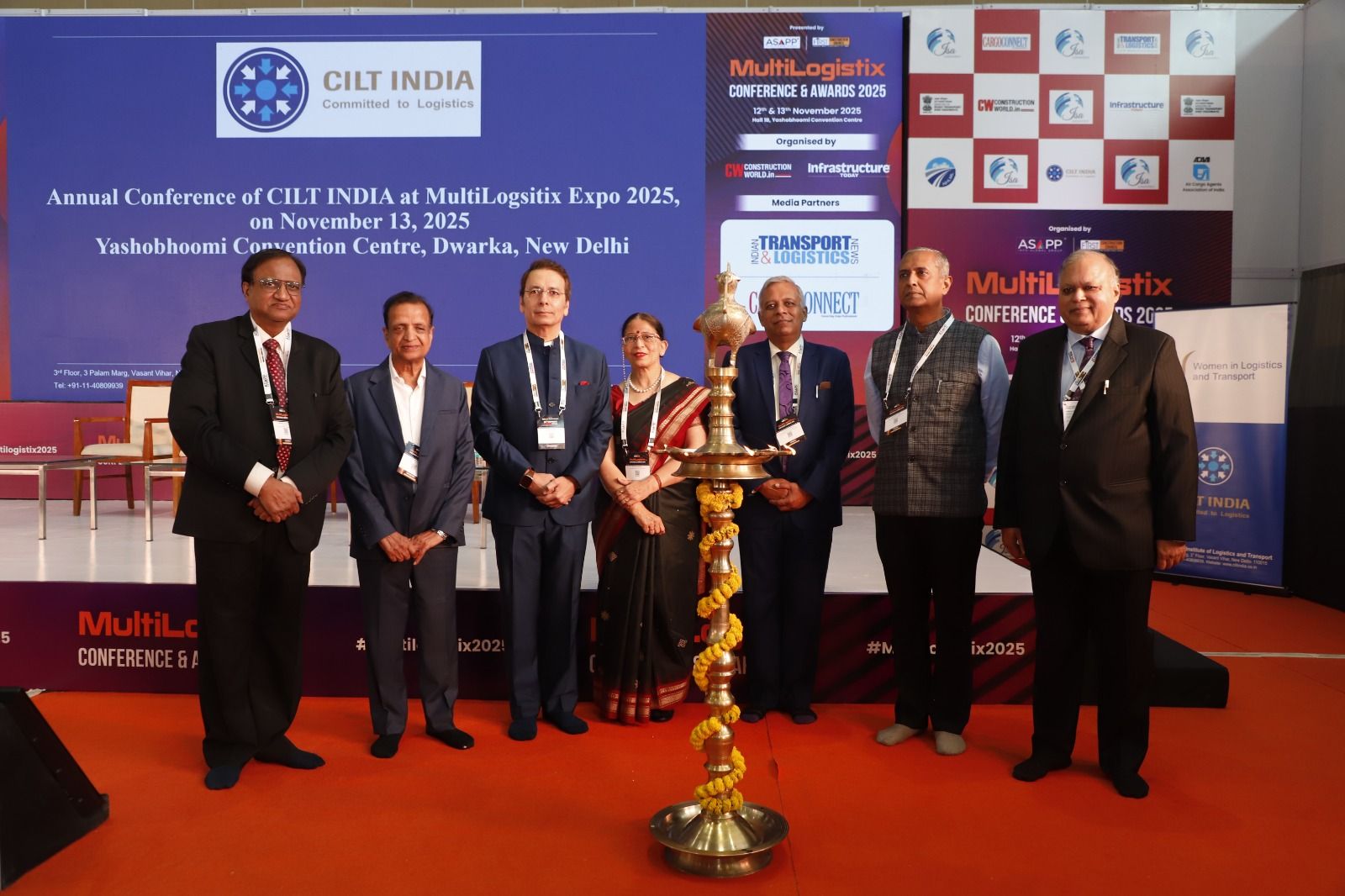
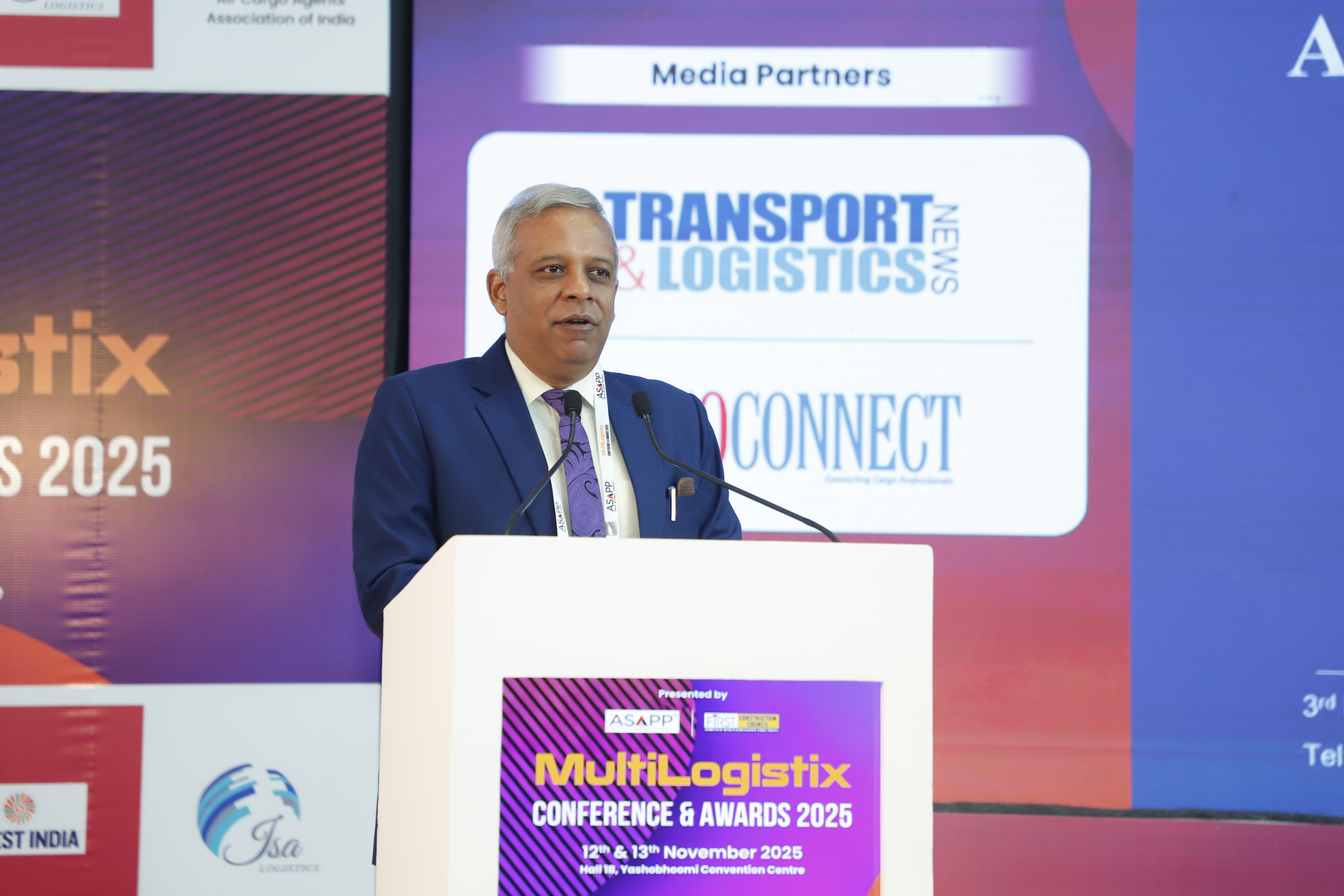
CMD CONCOR Shri Sanjay Swarup was the Guest of Honour. In his address, Shri Swarup shared insights on CONCOR’s expanding infrastructure and several customer-centric initiatives, such as:
- Movement of bulk cement through specially designed tank containers
- Deployment of LNG-powered trailers and adoption of a mobile app for first- and last-mile services
- Deployment of Electric Vehicles across terminals
- Cross-border cargo movement in CONCOR-owned containers to Sharjah and Dubai, with expansion planned to the Far East and in other areas.
- New services in collaboration with Indian Railways — Container Train Service with assured transit via Agra & Kanpur, Door-to-Door Parcel Service, and the Integrated Logistics Hub at Sonik
He also emphasized on the view that; CONCOR remains dedicated to enabling sustainable, technology-driven and customer-focused multimodal logistics solutions across India.
SESSION ONE
MAKING INDIAN LOGISTICS GLOBALLY COMPETITIVE:
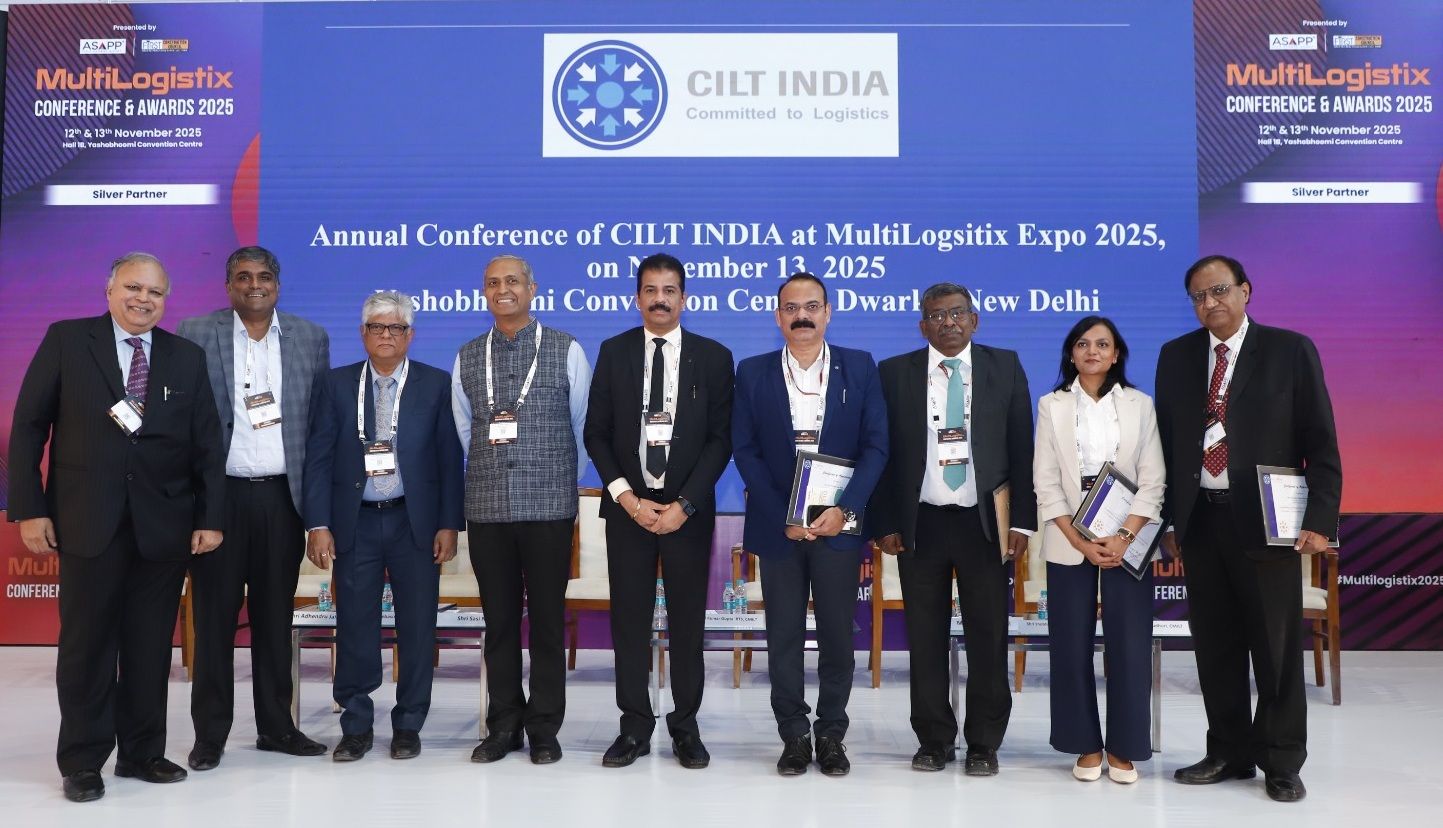
Session Chair & Moderator – Mr. Anil Kumar Gupta – Mr. Gupta emphasized on the fact that Logistics costs have come down to 7% of GDP but the benefits of this must trickle down to the end customer. Besides a larger share of container movement should shift to Rail, ensure better connectivity through assured first and last mile guarantee, movement of cement in tank containers and use of Flexi liner system.
Mr. Amitabha Chaudhary – Mr. Chaudhary in his address talked about Global Competitiveness were –
- Need for cost effective, resilient and reliable supply chains able to absorb demand and supply shocks, will provide better prices to consumers
- In the China +1 policy: countries as Vietnam have benefitted by taking away small scale manufacturing , giving large employment opportunities while India on the other hand has focused on semi-conductors, automotive, mobile assembly which is big scale but does not generate enough employment
- Infrastructure development would reduce inventory costs to a large extent
- Need for interplay of Human and Technology
Mr. Shobhit Bhatnagar – Mr. Bhatnagar explained how DFC would become a game changer for Indian Logistics scenario through its initiatives such as –
- Connecting NCR with JNPT by end December
- Participating in IMEC plan, International north-south corridor and Arabia
- Implementation of KAWACH for greater safety
- With a network of only 4% DFC carries 13% of freight- has higher GTKMS than other zonal railways
- Efficiency in the movement of coal, cement and milk
- Better loco utilization, saving in crew per train, better wagon utilization, eliminating level crossings and maintenance of blocks as reduced costs and improved efficiency
- Also running emergency passenger trains on EDFC from DDU to Dadri
Mr. Ravi P Chaturvedi – Mr. Chaturvedi emphasized that CONCOR has made some innovative changes that have helped to reduce costs thereby enhanced the competitiveness in the world market.
Mr. Adhendu Jain – Mr. Jain gave a new dimension on how to cut logistics costs –
- Not just the freight rate must go down but wastages and inefficiencies need to be reduced
- Use of digital technology and data analytics would give a boost to MSMEs- ULIP is an effort in the right direction
- Improving infrastructure ensures seamless multimodal connectivity and first and last mile issues
- Skill level training especially for truck drivers
Capt. Debasish Mishra – Capt. Mishra looked at competitiveness from the view of ports and shipping. He talked about
- Infrastructure- interlinking and integrating all processes at ports for better capacity utilization
- Modal shift- moving freight from road to coastal shipping and IWT. Haldia MMT, Kaluhat and Gaighat terminals on NW1 are being developed on PPP mode
- Port sector – Mission Blue Economy for development of huge ports like Vizinham and Vadhavan have deep draft and will be transshipment hubs for nearly 15 million TEUs per year
- Need for a synchronized digital platform using AI and Blockchain like ‘Sagar Ankalan’ will ensure reliability, reduce turnaround time and improve speed of doing business.
Mr. Sasi Nair – Mr. Nair brought forward all the pain points that need to be ironed out for Indian logistics to become competitive. He said –
- The policy must be made keeping the interest of the importer, exporter and the end user
- Need to tackle geopolitical challenges like Tariffs on urgent basis
- Use of AI driven technology for coordination, cooperation and collaboration – country wise data for all commodities with OD pairs for efficient deployment of resources for shipping lines
Ms. Neetika Bansal – Ms. Bansal also listed out the areas and issues which need to be tackled at top priority for Indian logistics to become globally competitive. They are innovation, risk management, resilience, reverse logistics, packaging and warehousing.
SESSION TWO
MAKING INDIAN LOGISTICS SUSTAINABLE:
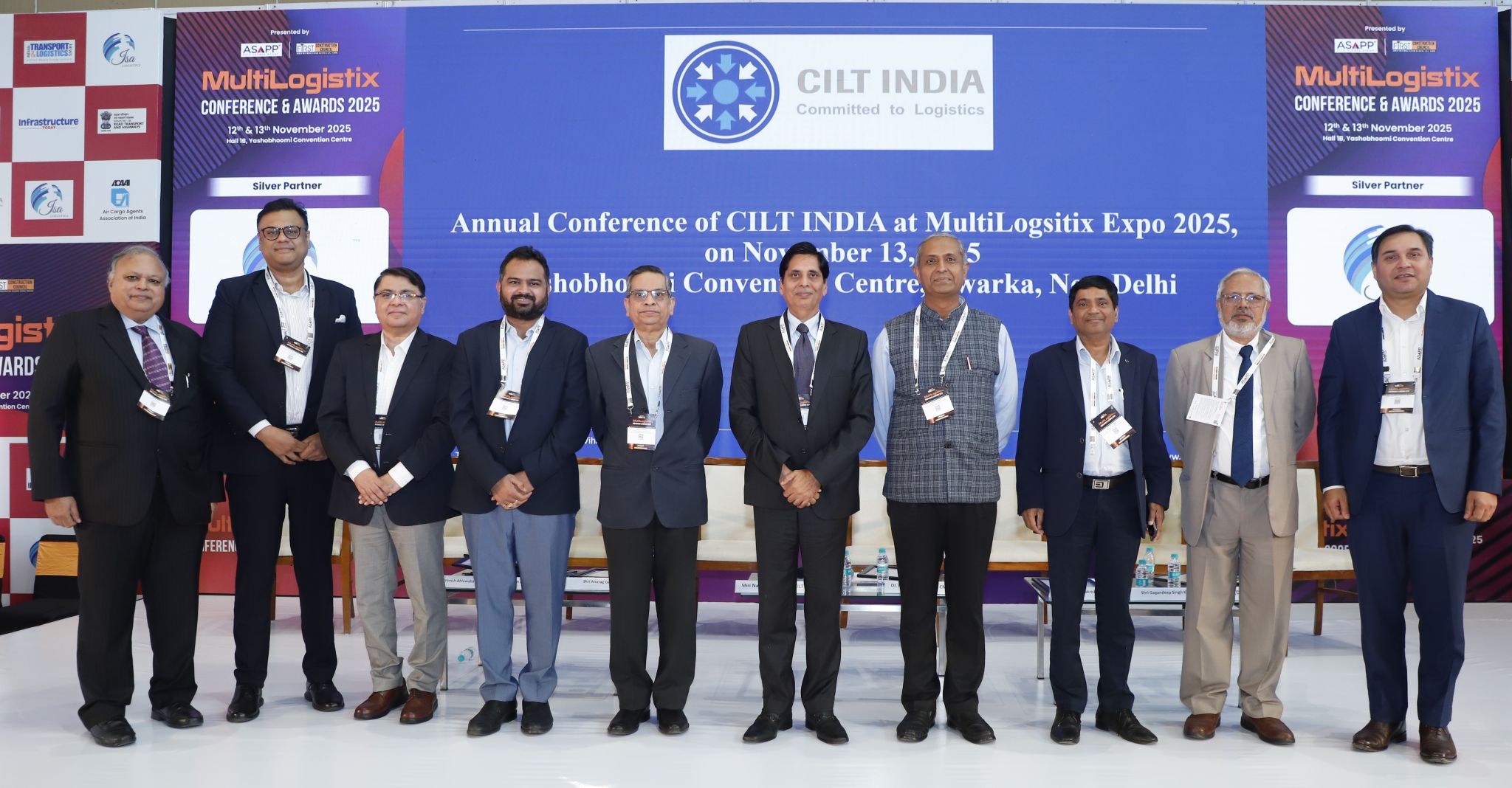
SESSION CHAIR & MODERATOR –Dr. Manoj Singh
Prof.(Dr) N. Jena – Prof. Jena emphasized on four main points –
- Skill management and manpower training and allowing people to work beyond the age of 65 years as in other western nations
- Economy needs to become competitive and sustainable to meet challenges
- Logistics cost efficiency
- Viksit Bharat aims at seamless connectivity for rail and coastal shipping for movement of freight
Mr. Vanish Ahluwalia – Mr. Ahluwalia talked on sustainability on the following pressing issues –
- Practices – there is urgent need for freight consolidation in case of LCL movement
- Intermodal – when we discuss on shift from road to rail,we need to consider pipelines as an alternative mode as well
- Need for application of digital technology for better route planning and navigation to reduces wastages in logistics
- Use of clean fuel to reduce emissions –LNG, Green Hydrogen, etc
Mr. Gagandeep Singh Klaire –Mr. Singh representing the trucking suggested some changes to be adopted for sustainable road transport. He listed the following-
- The adoption of EV in place of CNG for trucks carrying goods within cities for reducing urban emissions
- For heavy haul trucks better technology giving comfort to the drivers ensuring better service, also use of clean fuel like Green Hydrogen, LNG, etc
- Hybrid trucks will be introduced by 2027 which would cut freight cost
Mr. Pankaj Singhi – Mr. Singhi mostly talked about infrastructure development in a sustainable manner, giving importance to cleaner and greener modes of transport like rail, coastal shipping and inland waterways. He put forward some examples –
- China which has promoted shipping in a big way and reaping the benefits of large scale production
- Vietnam focusing development of inland waterways and riverine transport, which is cheaper and sustainable
- India needs to set benchmarks for sustainability, something similar to GLEC certification where calculation of Carbon emission norms are standardized and allowances clearly mentioned. This would help logistics industry to get streamlined and work towards sustainability
Mr. S Ramakrishna- Mr. Ramakrishna gave the insights from a custom broker’s point of view he emphasized the all legislation must be upgraded to create sustainable links for future needs. He praised the ULIP initiative and said it is among the best in the world and other emerging economies must emulate this. Due to bureaucratic hindrances we are unable to take full advantage of it. For EIM trade there is no clear cut policy on how to cut pollution and wastages, here BIS must take the challenge and provide a benchmark.
Mr. Anurag Gupta – Mr. Gupta talked about modal mix optimization. His view was –
- Railways must focus on capacity creation, bring reforms in legislation and become customer sensitive
- Example of DB Rail of Germany –it has invested in both forward and backward integration. DB Rail has complete control on the trucking industry for seamless first and last mile connectivity and in turn the trucking can taking bookings from customers for assured movement of freight by rail.
- Need for integrated planning for India – all modes work in silos and compete with each other for traffic- DFC and DelhiMumbai expressway compete with each other, it is a waste of precious national resource!
- Need for improving services with skilled manpower
Mr. Naresh Kumar – Mr. Kumar gave very innovative ideas in wagon design, which would help to carry more load at lower cost thereby making Indian railway more competitive and sustainable. He explained in detail some of is innovations –
- New wagon design and special container for improving rail share in the market
- Double stack container movement introduced in 2006 has helped to reduce carrying cost by 20% to 25%
- Double stack dwarf container movement has made a 26% to 30% saving in cost for IR
- The use of stainless steel for containers has reduced tare weight and increased carrying capacity from 30 to 36 tonnes
- The introduction of folding containers would ease moving of empty returns
- Corner casting of containers meets with international standards
- All these measures have helped IR in terms of better loading and lead.
TAKE AWAYS FROM THE CONFERENCE
- LOGISTICS COST:
According to the NCAER report, India’s Logistics cost is currently estimated at 7.97% of the GDP. This reduction has been attributed to government initiatives like PM Gati Shakti National Master Plan and improved infrastructure – dedicated freight corridor, Sagarmala project, etc. Efforts should be made to more freight by Rail which is the most cost effective mode of transportation. At the same time the benefits of tis reduction in logistics cost must trickle down to the end consumer in terms of reduced prices in the markets.
- MAKE IN INDIA:
India has focused on the manufacture of semi-conductors, automobiles, IT and pharmaceuticals which are large scale but generate little employment opportunities, therefore, there is need to pay greater attention on development of medium and small scale industries which will create larger level of employment.
- DEDICATED FREIGHT CORRIDOR:
At present the DFC carries only 14% of the total freight in India. It can become a game changer for Indian logistics with efforts/initiatives such as –
- Implementation of KAWACH for better safety
- Better Loco and Wagon utilization with application of AI
- Movement of time-tabled freight trains
- Some initiatives/innovative changes successfully tried out by CONCOR need to be replicated on a larger scale to improve efficiency and competitiveness in the global market.
- POLICY INITIATIVES:
- Changes need to be made in the policy to safeguard the interests and ease of doing business for importers and exporters – finally benefitting the end customer. Simplify regulations, reduce red tape and improve India’s ranking in the global market.
- Firmer policy directives for development of coastal shipping and IWT for a modal shift for moving freight away from Road to water transport
- Detailed policy initiatives for application and security directives of AI based technology for better coordination, cooperation and collaboration between different modes of transport.
- Encourage foreign direct investment by liberalizing norms in various sectors like Railways, construction and defense.
- PRACTISES & PROCEDURES:
- Set standards and systems for freight consolidation
- Adoption of SMART technology for route planning and navigation to reduce wastages in the supply chains
- Use of new tech trucks to reduce fuel costs, urban emissions and better driver comfort
- Streamline all procedures and practices in accordance with global benchmarks
- Ensuring first and last mile connectivity trough forward and backward integration between different modes
- Use of better wagons and dwarf containers that enhance carrying capacity and reduce costs.
- HUMAN RESOURCE:
For the success of initiatives like Skill India Mission, Digital India and Start-up India there is need to upgrade training facilities which has a good mix of practical training and real-time analysis is case studies. New innovative study materials need to be developed to acquaint personnel with better understanding of the problems – how to deal with congestion and balance safety, security and environmental goals, integration of AL and autonomous vehicles, strategies for optimal modal mix and sustainability.